
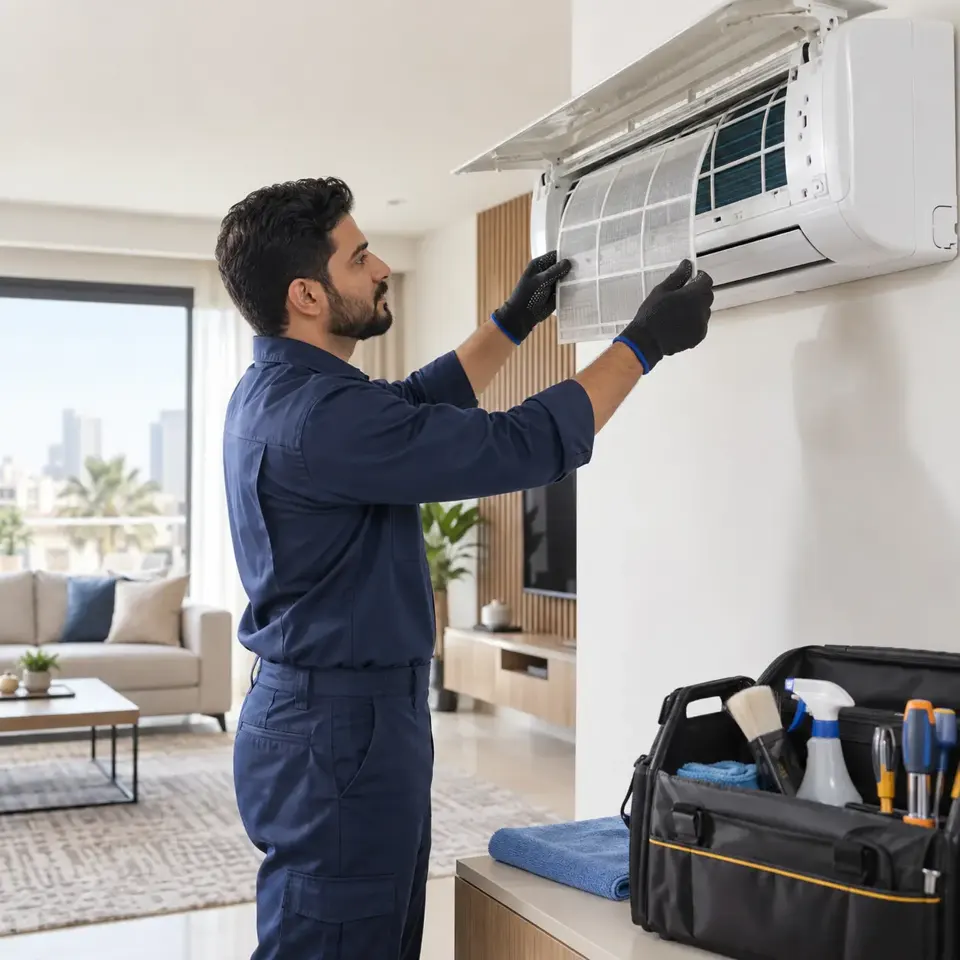
Illustrative example: water appears below a split AC after thirty minutes. Someone immediately suggests more refrigerant. First establish whether the water comes from the pan, drain connection or condensation on a poorly insulated surface.
Trace the source, correct the cause and verify the drainage path after repair.
Condensate belongs in a defined drainage path
Cooling removes moisture from the air at the cold indoor heat exchanger. A pan collects that water and directs it to the drain. Water leaving the intended drain outlet differs from water falling into the room.
Note whether leakage began after installation or cleaning, after long operation, or with a change in humidity. Timing guides the inspection but does not prove a cause.
Inspect drainage and connections
Deposits, a kinked hose, an unsuitable fall or a loose connection can interrupt drainage. A submerged outlet can also cause problems in some arrangements. Where a pump is fitted, its operation, supply and level sensing need model-appropriate checks.
Ask what portion of the route was inspected. If pipework disappears above a ceiling, the report should distinguish confirmed findings from inaccessible sections. Cleaning the visible end alone does not establish that the whole path is clear.
Freezing can lead to water when ice melts
Ice on the coil or piping requires diagnosis. Possible causes include restricted airflow and refrigeration faults, depending on the system. Thawing ice does not resolve the reason it formed.
Do not chip ice away or pour hot water over the coil. If water is leaking indoors, particularly near electrical components, stop using the unit and obtain qualified assistance. Isolate supply only from a safe, dry location.
Describe the symptom and verify the repair
Record timing, airflow changes, visible ice and recent work. A photograph from a safe distance can help; opening an electrical cover is unnecessary. After repair, request an appropriate drainage test and operating check at the previous leak location.
| Observation | Inspection focus |
|---|---|
| Cooling appears normal | Pan, connections and drain |
| Ice and weak airflow | Air delivery and freezing causes |
| Droplets on pipe surface | Insulation and condensation |
| Leak after service | Reassembly and affected connections |
Keep the proposed work specific
Separate drainage repairs from refrigeration work. If refrigerant charging is recommended, request the supporting findings and the approach to suspected leakage. For a NACE enquiry, provide the equipment model, location and the pattern of leakage so the visit addresses a defined complaint.
Introductory guide: inspection, cleaning or repair? →
What should the water-leak quotation cover?
A drain route may be exposed or concealed above a finished ceiling. Ask the quotation to explain the limits of the initial inspection and the next step if access to a hidden section is needed. Ceiling openings and reinstatement should not be assumed to be included in the AC visit price.
| Work stage | What to agree |
|---|---|
| Inspection | Accessible components and the limits of verification |
| Repair | The proposed action and materials after the cause is identified |
| Related works | Responsibility for openings and reinstatement if required |
Keep a photograph of the wet location and a note of when leakage occurs as a reference for verification. If the fault does not appear during the visit, ask for that limitation and the next check to be recorded. Compare costs against the approved repair scope, including any section that remains unverified or outside the work.
Questions & acceptance checklist
- Record the location and timing.
- Inspect pan, connections and drain.
- Report ice or airflow changes.
- Stop use if water threatens electrics.
- Verify the previous leak location.
Before you decide
Is all water outside the unit a fault?
Expected condensate at the designed drain outlet is different from leakage into a room or another unintended location.
Will cleaning the filter always stop a leak?
It may improve restricted airflow, but cannot repair a disconnected hose, damaged pan or unrelated fault.
Does ice mean refrigerant must be added?
No. The cause of freezing needs diagnosis first; ice alone does not establish the correct charge.
Plan your AC service in Jeddah
Share the equipment type, approximate quantity, site and symptoms so the team can assess the inspection or installation scope.
AC maintenance, installation and ductwork in Jeddah
Request a maintenance visitTechnical & editorial references (3)
References support general principles. Product instructions and the approved design govern execution details.