
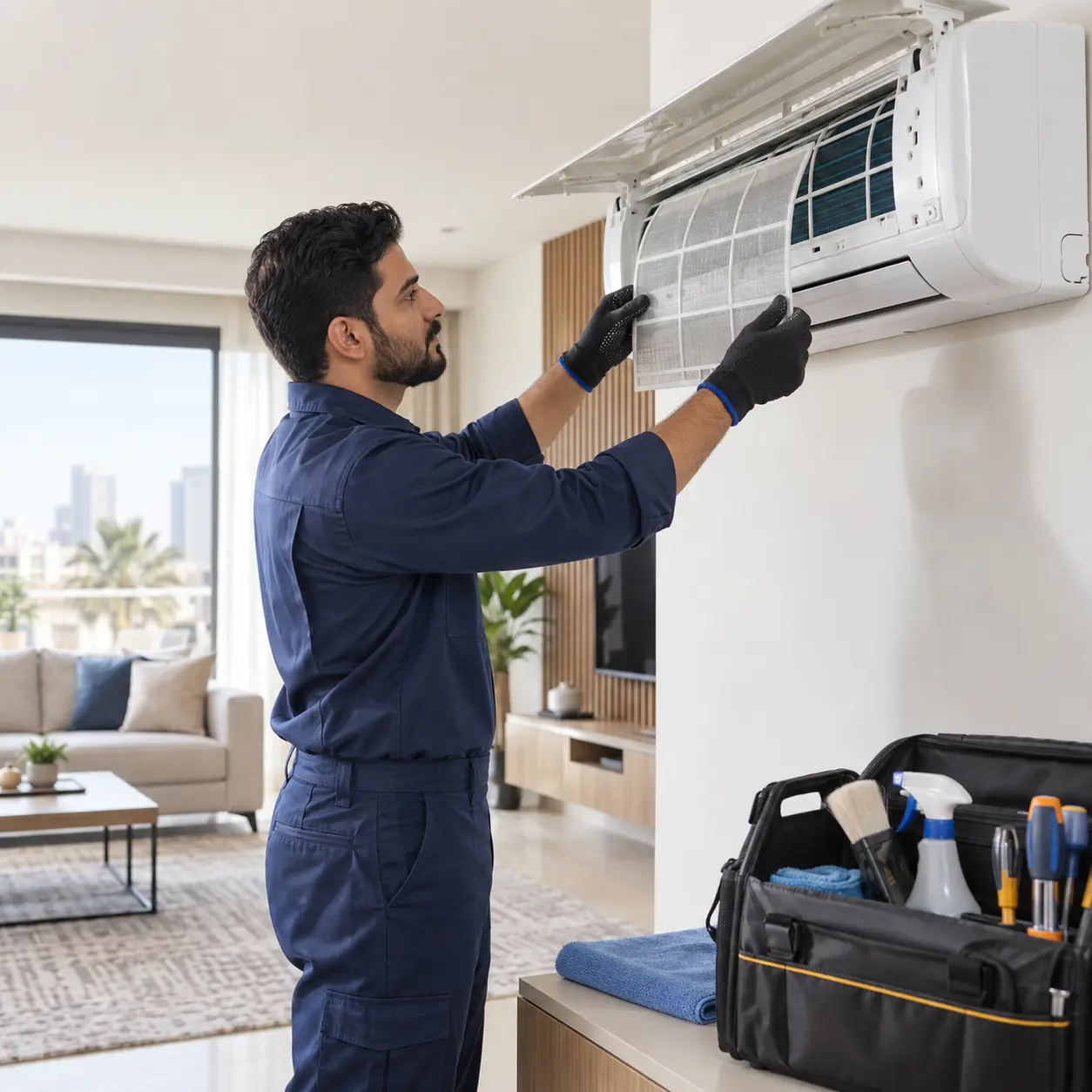
This guide helps you prepare the necessary questions before requesting installation. Structural suitability, fixing method and specifications are approved following site and specialist review.
Start by describing the symptom, not naming the service
Poor cooling may relate to airflow, dirt, settings or a technical fault. Dripping may relate to drainage, insulation or installation. One photograph cannot establish the cause; the technician determines the on-site measurements or inspections needed before proposing a remedy.
- When did the fault start, and is it present throughout operation?
- Is there water, noise, odor or electrical tripping?
- Unit type, approximate capacity and location of both units
- Last cleaning or repair, and what changed afterwards
When is cleaning the required scope?
When inspection confirms that dirt restricts airflow or the condensate tray and drain need cleaning, we determine whether routine on-site cleaning or deeper washing is required. Cooling and condensate drainage are retested after service within its scope.
- Inspecting filters, heat exchanger and condensate tray
- Selecting the cleaning level appropriate to unit condition
- Protecting the site and electrical components during work
- Testing operation and drainage after cleaning
When is separate diagnosis or repair needed?
If performance remains poor after dirt is removed, or repeated electrical trips or unusual noise occur, a separate technical diagnosis is required rather than assuming washing will resolve the issue. The technician explains the recommendation, required parts or work, and cost before proceeding.
- Identifying the source of the problem from inspection results
- Distinguishing equipment work from electrical or drainage work
- Clarifying parts, materials and warranty scope
- Retesting the equipment and documenting the result
What should you send the team before a visit?
Send a photo of the unit’s nameplate and both units if possible, plus a brief description of the symptom, timing, district and access. These details help prepare the technician and tools and establish whether the request is residential or part of a facility contract covering multiple units.
- Photos of the unit, installation location and symptom
- Number and types of units for facility requests
- City, district and suitable appointment time
- Any available previous repair report or invoice